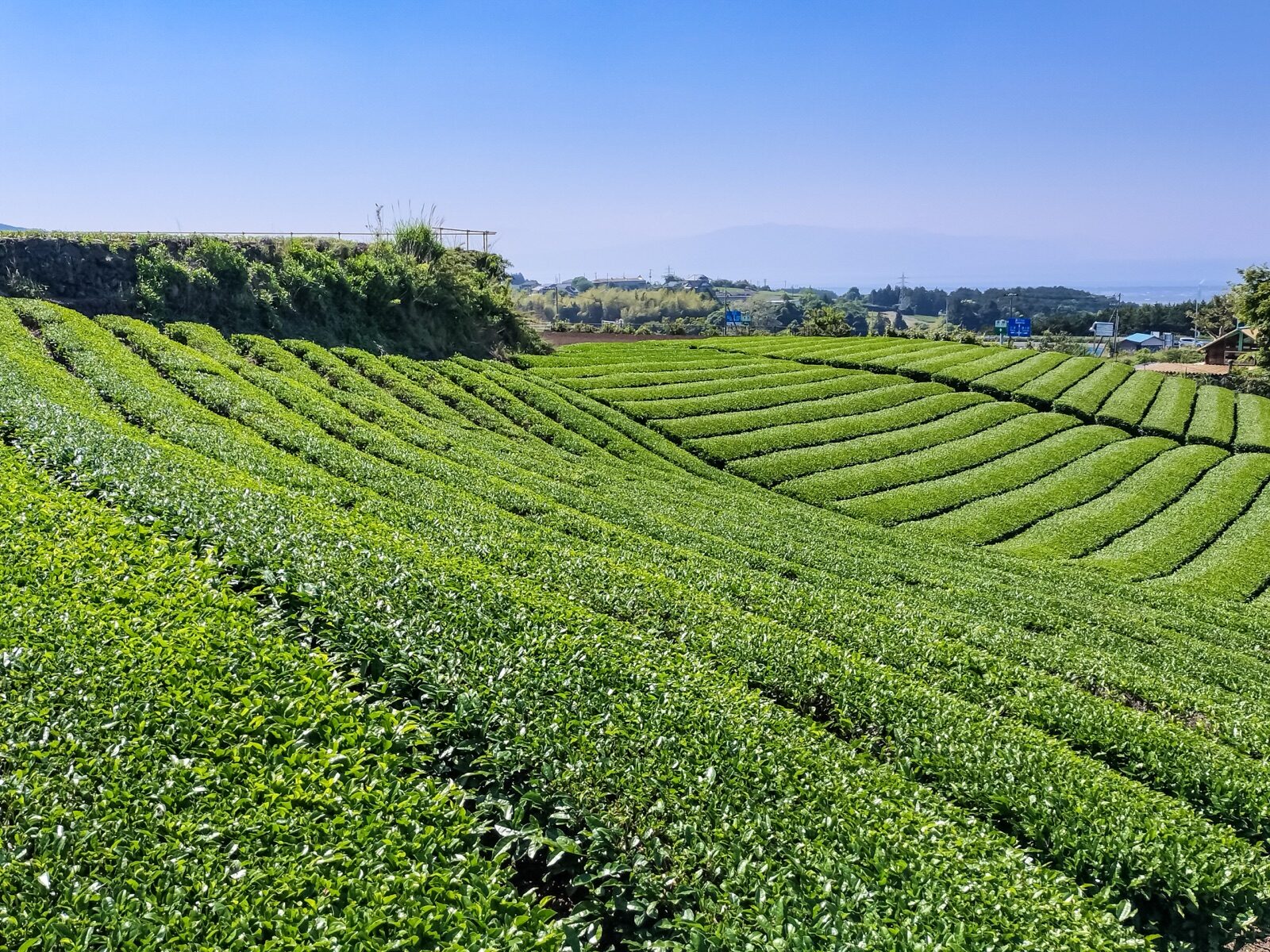
Buyers who treat matcha as a commodity powder are often surprised by its constraints: why prices jump after spring, why a supplier cannot simply “make more”, or why one lot is greener than the last. The answers are in how matcha is produced.
01 · Tencha
Matcha starts as tencha
Matcha is ground tencha. Tencha is tea grown under shade, then steamed, dried and stripped of stems and veins without the rolling used for sencha. The flat, brittle leaf fragments that remain are what the mills grind. A supplier who talks about “tencha quality” is talking about the raw material that decides most of what you will taste and see.
02 · Shading
Shading is what makes matcha matcha
For roughly three to four weeks before harvest, fields are covered to cut sunlight. The plant responds by producing more chlorophyll (deeper green) and retaining more amino acids such as theanine (sweetness and umami) while producing fewer catechins (astringency). Shading also reduces yield and adds labour, which is a large part of why tencha costs more than other teas.
- Traditional straw or reed shading and modern black netting are both used; methods and duration vary by producer and grade
- Longer or heavier shading tends to give darker green and more umami, up to a point
- Shading decisions are made per field before harvest; they cannot be changed for a late order
03 · Harvest
Harvest timing and “first flush”
The first harvest of the year, ichibancha, typically takes place from late April into May depending on region and season, with warmer southern regions such as Kagoshima earlier and cooler regions later. First-harvest leaves are young, tender and sweet and yield the highest grades. Second and later harvests produce more astringent, yellower leaf that goes into culinary and beverage grades. Because the top grades come from one short window, their annual supply is fixed by the time summer arrives; see the matcha supply calendar.
04 · Processing
From leaf to tencha to matcha
| Step | What happens | Why it matters to buyers |
|---|---|---|
| Steaming | Leaf is steamed within hours of picking to stop oxidation | Preserves green color and fresh aroma |
| Drying | Leaf is dried in tencha dryers without rolling | Creates the flat leaf that mills well |
| Sorting | Stems and veins removed; leaf sorted by size and quality | Grade separation starts here |
| Storage | Tencha is stored cool and dark, often refrigerated | Tencha keeps better than powder; suppliers mill to order |
| Milling | Tencha ground to powder, traditionally on stone mills | Slow, capacity-limited; see particle size and milling |
| Blending | Lots blended for consistency and grade targets | How suppliers keep a grade stable across fields and years |
Good suppliers keep tencha in cold storage and mill close to shipment, because powder degrades faster than leaf. Ask when your lot was milled, not only when it was harvested.
05 · Region and cultivar
Region, cultivar and field
The same process gives different results in different places. Soil, climate, cultivar and the producer’s choices in shading and picking create regional and farm-level character; see the regions guide and single-cultivar, single-origin or blended matcha.
06 · Questions
Questions this should prompt
- Which harvest and year is this lot from?
- How was the field shaded, and for how long?
- When was the tencha milled relative to shipment?
- Is the grade a single field or a blend, and how is the blend kept consistent?
- Can you supply this grade at the same quality next year?
Seeing fields, shading and mills in person answers these questions faster than any email. We arrange supplier and region visits for business buyers.
07 · FAQ
Frequently asked questions
How long is tea shaded before harvest for matcha?
Commonly around three to four weeks before the first harvest, with methods and duration varying by producer and grade. Longer, heavier shading tends to give darker green and more umami.
When is matcha harvested in Japan?
The first harvest typically runs from late April into May, earlier in warmer southern regions such as Kagoshima and later in cooler areas. Later harvests follow in summer and, in some areas, autumn.
Is matcha milled right after harvest?
Usually not. Tencha is processed and stored cool, and milled to order through the year, because leaf keeps better than powder. Ask when your lot was milled, not only when it was harvested.
Related services: Wholesale matcha from Japan · Private-label matcha (OEM) · Quality and documentation
Japan-side support
Want to see production for yourself?
We arrange supplier and region visits in Japan for business buyers, with interpretation and a commercial agenda.
Send your requirements