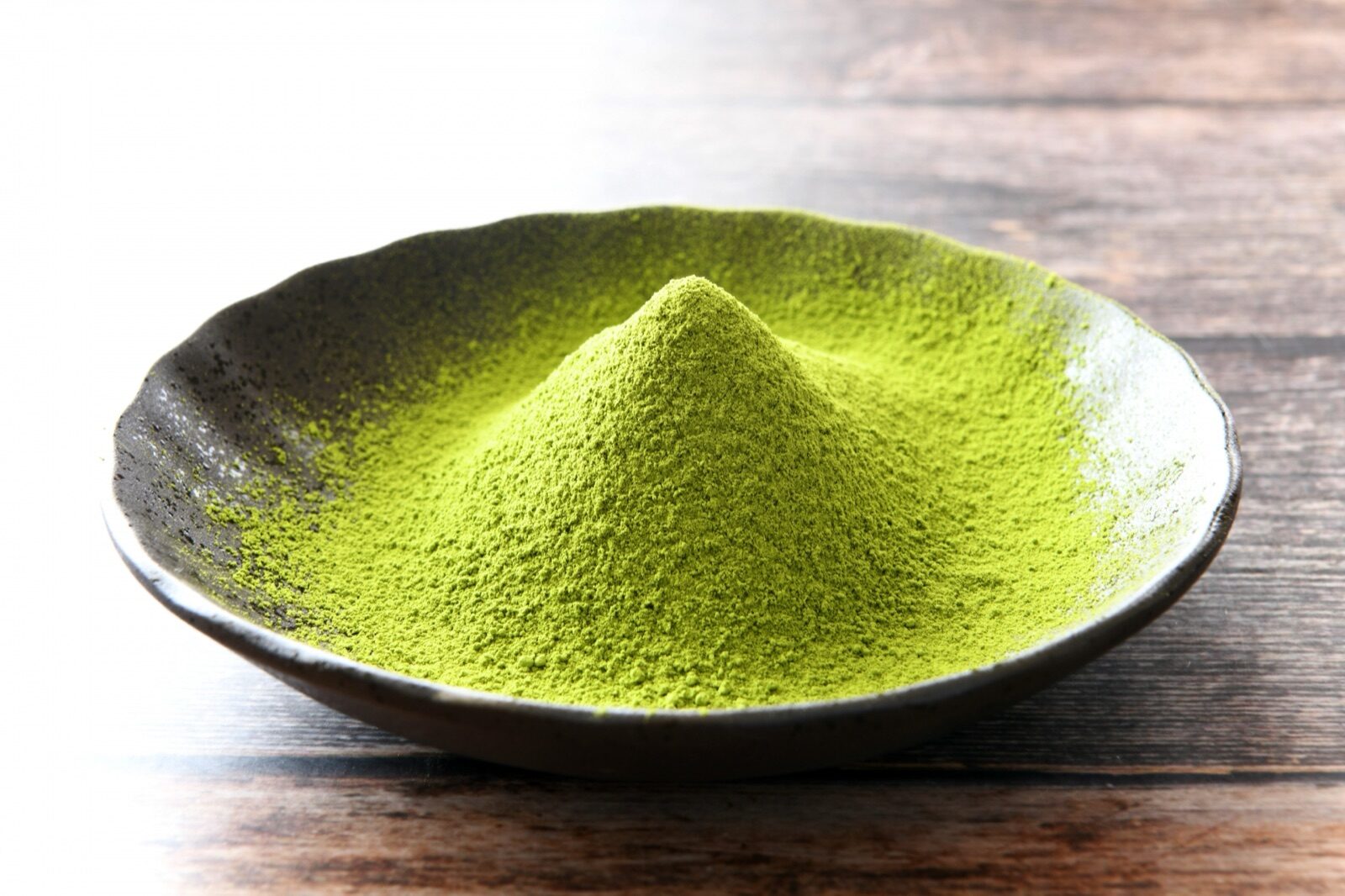
Matcha color sells product. A vivid, slightly bluish green signals freshness and quality; a yellow or olive tone reads as stale or cheap, even when the taste is fine. Because color is so visible, it should be one of the first attributes you specify, and one you check on every lot.
01 · What drives color
What determines the green
- Shading increases chlorophyll and gives the deep green; longer shading tends to darker, bluer green.
- Harvest: first-harvest, young leaves are greener; later, mature leaves are yellower.
- Processing: careful steaming and drying preserve color; heat during milling dulls it.
- Age and storage: light, oxygen, heat and humidity turn green towards yellow-brown over time; see shelf life and bulk storage.
- Particle size: finer powder appears brighter; see particle size and milling.
02 · Visual method
Visual grading done properly
Most suppliers grade color by eye, and a trained eye is reliable when conditions are controlled. Make your own visual checks repeatable:
- Compare against a retained reference sample, not memory
- Use the same white surface and the same daylight-balanced light every time
- Level and press the powder the same way; texture changes apparent color
- View at the same angle, and photograph under identical conditions for records
- Check the color in the finished product too, not only as dry powder
Keep a “target” sample and a “minimum acceptable” sample. Lots are approved if they sit between the two.
03 · Colorimeter
Instrumental measurement
A colorimeter or spectrophotometer reports color as L*a*b* values: L* for lightness, a* for the green–red axis (more negative is greener) and b* for the blue–yellow axis (higher is yellower). Some larger suppliers measure it; many do not. If your product needs tight control, buy or borrow an instrument, measure your reference samples, and set a tolerance around them. Specify the instrument type, sample preparation and illuminant so numbers are comparable between you and the supplier.
| Approach | Best for | Limitation |
|---|---|---|
| Visual vs retained sample | Every buyer, every lot | Depends on conditions and training |
| Photographs under fixed setup | Records and remote approval | Camera and screen variation |
| L*a*b* measurement | Manufacturers, tight tolerances | Needs an instrument and a method |
04 · Stability
Color stability in the application
Powder color is only half the story. Matcha color shifts with heat, pH, light and time in the finished product: it browns in high-heat baking, can dull in acidic drinks, and fades in clear packaging. Test candidates in the real product and, where shelf life matters, over the real shelf life. See matcha for ice cream and frozen desserts and matcha in RTD and bottled drinks.
05 · Specification
Turning it into a specification
- Reference sample identifiers, held by buyer and supplier
- Viewing method or L*a*b* target with tolerance
- Harvest and shading statement, since they underpin color
- Packaging that protects color: opaque, barrier, nitrogen flush or oxygen absorber
- Approval step for each lot before shipment
Add color to your sample evaluation protocol so it is scored consistently from the first sample onwards. If you would like the supplier side handled in Japan, see our quality and documentation service.
06 · FAQ
Frequently asked questions
What color should good matcha be?
A vivid, saturated green with a slightly bluish cast; yellow, olive or brown tones indicate later harvest, heat damage or age. Judge color against a retained reference under fixed lighting rather than by memory.
Do suppliers measure matcha color instrumentally?
Some larger suppliers report L*a*b* values; many grade by eye. If you need tight control, measure your references yourself and agree a tolerance and method with the supplier.
Why did the color fade in my product?
Heat, alkaline pH, oxygen, light and time all shift green towards yellow-brown. Test candidates in the real product and over the real shelf life, and start with a more vivid grade to leave headroom for process loss.
Related services: Wholesale matcha from Japan · Private-label matcha (OEM) · Quality and documentation
Japan-side support
Want color specified with your suppliers?
Send us your product and a target sample if you have one. We ask suppliers in Japan for color data and matching lots and coordinate retained references.
Send your requirements