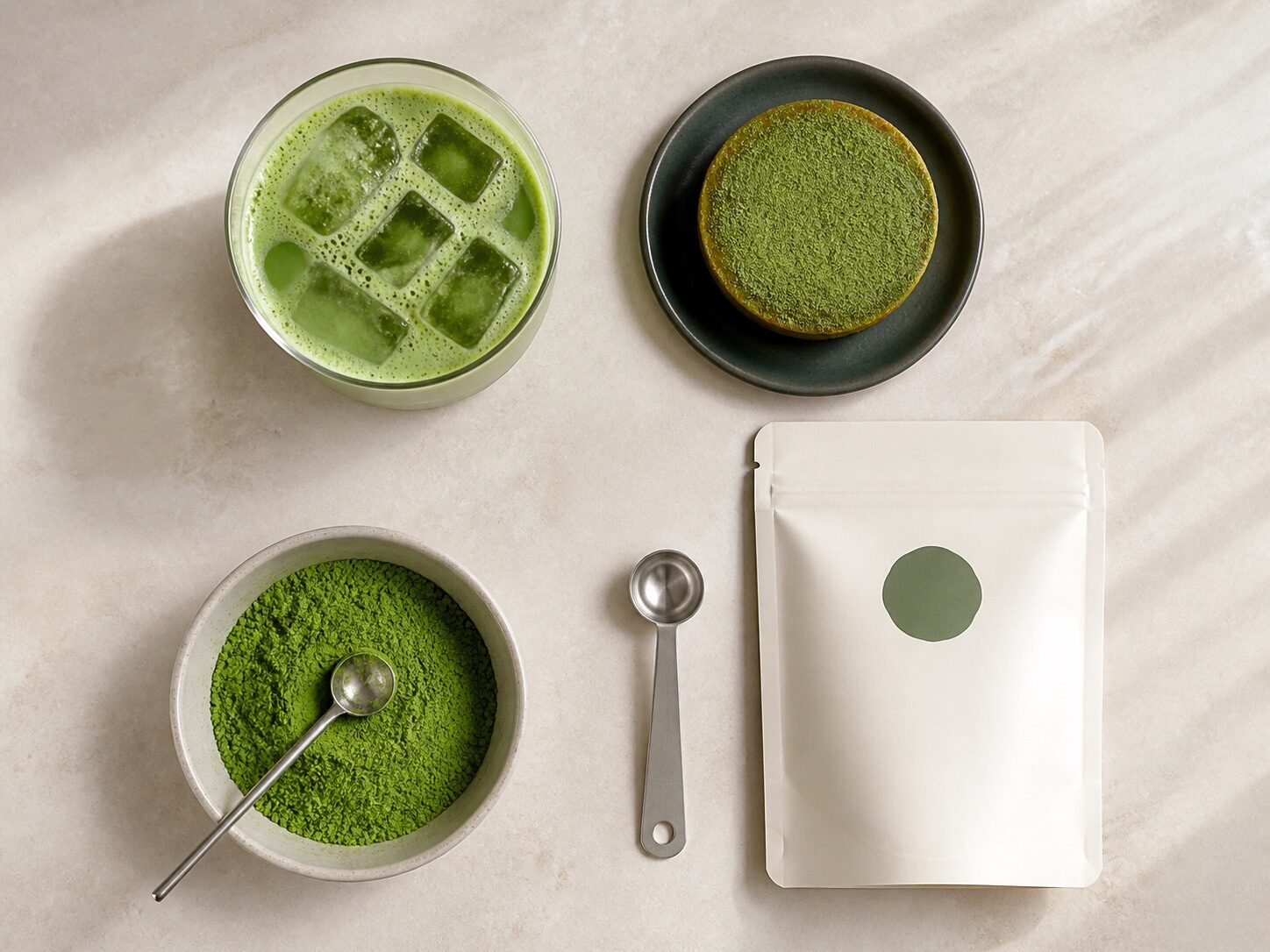
Matcha ice cream and gelato are among the most popular applications for Japanese matcha outside tea drinks, and among the hardest to get right at scale. Consumers judge them on color first, then on whether the flavor reads as real matcha rather than sweet green. Both depend on the grade you choose and how you specify it.
01 · What matters
What the application demands
- Color that survives: fat, sugar, air and time in the freezer all dull green. The starting color must be vivid enough to end up attractive after months.
- Flavor through fat and sugar: sweetness and fat mask delicate notes; the matcha needs enough umami and character, and controlled bitterness so it does not become harsh at the dose needed for color.
- Dispersion: powder must disperse evenly in the mix without specks or grit; particle size and mixing method matter; see particle size and milling.
- Consistency: a seasonal color shift is obvious in a freezer cabinet full of tubs; see lot-to-lot consistency.
02 · Grade
Which kind of matcha
Top drinking grades are usually neither necessary nor economical in ice cream; their finest aromatics disappear in the base. What works is a grade selected for deep, stable color, moderate bitterness and clean flavor at a manufacturing price. Some manufacturers use two grades: one for color and body, a smaller share of a higher grade for aroma. Ask suppliers directly for “grades our customers use in ice cream”, then test.
03 · Testing
Test the way it will be sold
| Test | What to look for |
|---|---|
| Base color at dose | Compare candidates at the same dose in your base |
| Frozen storage | Color and flavor after 2, 4, 8 weeks and at target shelf life |
| Light exposure | Effect of display lighting on tubs or cones with clear windows |
| Dose ladder | Lowest dose that meets color and flavor targets |
| Texture | Any grittiness or speckling at the target dose |
| Sensory panel | Bitterness, sweetness, aroma versus reference |
Record color with a fixed photo setup or a colorimeter; see how to specify matcha color.
A more expensive grade that reaches target color at a lower dose can be cheaper per litre than a cheap grade used heavily. Compare cost per finished unit, not per kilogram.
04 · Specification
Specification points
- Harvest and origin statement, and whether blending is permitted
- Color reference sample and tolerance, in powder and in your base
- Particle size or sieve, and milling method
- Bitterness/astringency descriptor with a reference sample
- Microbiological, heavy-metal and residue panel per lot; see how to read a matcha COA
- Packaging protecting color: opaque, barrier, nitrogen flush or oxygen absorber
- Storage guidance for your plant
05 · Supply
Supply and volume
Manufacturing volumes are attractive to mills and larger manufacturers in Japan, who can offer specification-based grades and lot approval. Ask about annual availability and price review timing, since food grades draw on later harvests and larger regions where supply is steadier; see why matcha prices rose and how to plan.
06 · Support
Sourcing production grades
Our matcha for food manufacturers service turns your base recipe and volume into a specification, sources candidates from Japanese mills and manufacturers, and coordinates samples for your frozen shelf-life tests.
07 · FAQ
Frequently asked questions
Which matcha grade is best for ice cream?
A grade selected for deep, stable color, moderate bitterness and clean flavor at a manufacturing price, tested in your base over your shelf life. Top drinking grades add cost without their aroma surviving fat and sugar.
How much matcha do I put in ice cream?
It depends on the base and the grade; run a dose ladder in your recipe and choose the lowest dose that meets color and flavor targets. Compare candidates by cost per finished litre, not per kilogram of powder.
Why does matcha ice cream turn yellow?
Chlorophyll degrades with oxygen, light, heat and time; fat and air in the base can dull green further. Start with a vivid grade, protect it in storage and packaging, and test finished tubs under display conditions.
Related services: Wholesale matcha from Japan · Private-label matcha (OEM) · Quality and documentation
Japan-side support
Developing a matcha ice cream or gelato?
Send us your base recipe, dosage and volume. We source candidate grades in Japan and coordinate samples for your frozen shelf-life tests.
Send your requirements