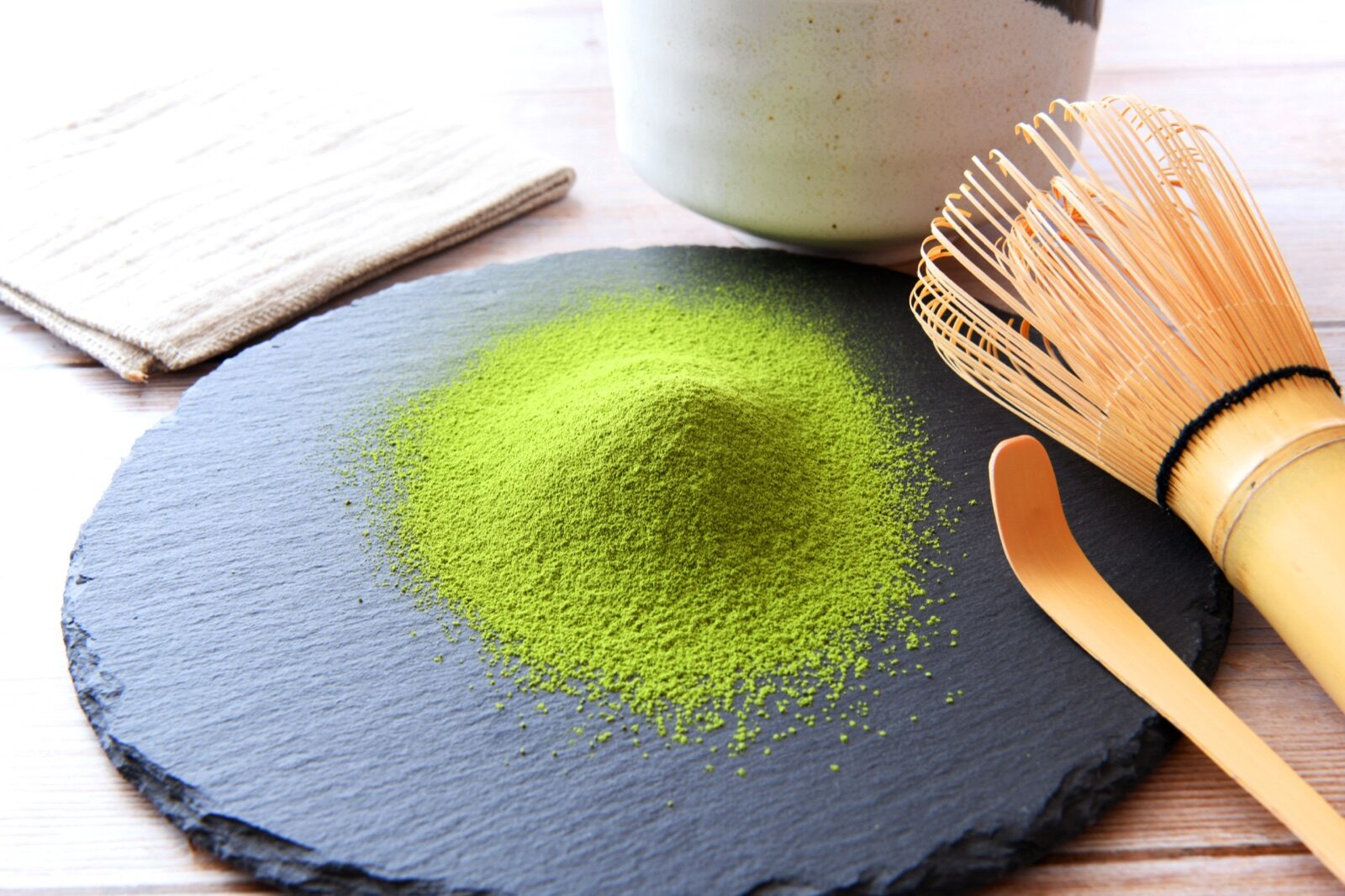
Cafés often choose matcha the way they choose coffee beans: by price per kilogram and a quick taste. Matcha punishes that approach, because dose and grade interact. A brighter, less astringent grade may let you use less powder for the same color and flavor in milk, and a cheaper grade may need a larger dose or produce drinks customers do not reorder.
Cost per cup is the number that keeps the decision honest.
01 · Formula
The basic formula
Cost per cup = dose in grams × landed price per gram, plus waste.
- Dose is what your recipe actually uses per drink, in grams. Measure it; “one bamboo scoop” varies.
- Landed price is the price per kilogram including freight, duty, brokerage and packaging, not the supplier’s ex-works quote.
- Waste covers powder lost in sifting, on the whisk and in the shaker, plus product discarded past its best. A few percent is normal.
If landed matcha costs the equivalent of 90 currency units per kilogram, that is 0.09 per gram. At a 2 g dose with 5% waste the matcha in the cup costs about 0.19. At a 3 g dose the same powder costs about 0.28. The example is illustrative; use your own prices.
02 · Dose
Dose is a recipe decision, not a supplier decision
Test each candidate matcha in your actual drink at two or three doses and record the smallest dose that meets your color and taste target. Higher-quality beverage grades often reach the target at a lower dose because their color is more vivid and their bitterness lower. Our sample evaluation protocol sets out a repeatable tasting.
| Candidate | Price/kg (landed) | Dose to target | Matcha cost per cup |
|---|---|---|---|
| Grade A | Lower | Higher | Often not the cheapest per cup |
| Grade B | Higher | Lower | Frequently the better economics |
03 · Volume
Turning cups into an annual volume
Cups per day × dose × operating days gives your annual usage. Twenty lattes a day at 2 g is roughly 15 kg a year; a chain of ten sites at fifty lattes each is around 350 kg. Those figures decide which supplier types and minimums are realistic; see matcha wholesale minimum order quantities and buying wholesale as a small business.
04 · Landed cost
Do not forget the landed cost
Freight, duty, brokerage and packaging can add materially to a small shipment. Ask your forwarder for a landed estimate at your first order size and at your annual size; the difference is often the argument for ordering quarterly rather than monthly. The Incoterm on the quote decides which costs are yours; see Incoterms for matcha imports.
05 · Consistency
Consistency has a price too
A grade that varies between lots forces baristas to adjust doses and produces inconsistent drinks. Ask suppliers how they keep beverage grades consistent across harvests and lots; the answers are covered in lot-to-lot consistency in matcha.
06 · Decision
A simple decision sheet
- Measured dose per drink for each candidate at target color and taste
- Landed price per gram at your realistic order size
- Waste allowance
- Cost per cup and margin at your menu price
- Supplier minimums, lead time and consistency notes
With that sheet, price per kilogram becomes one input rather than the decision. If you would like beverage grades sourced from Japan against your recipe and volume, see matcha for cafés.
07 · FAQ
Frequently asked questions
How much matcha goes into a latte?
Recipes typically use a small number of grams per drink, and the right dose depends on the grade, the milk and the drink size. Measure your actual dose and test each candidate at two or three doses to find the lowest one that meets your color and taste target.
Is expensive matcha better for lattes?
Not automatically. Latte grades are chosen for vivid color and low astringency in milk, not for the delicate aroma prized in whisked tea. A well-chosen beverage grade often beats a top drinking grade in the cup and on cost.
How do I compare two suppliers fairly?
Test both in your recipe at the lowest dose that meets your target, calculate cost per cup using landed price and waste, and add consistency, minimums and lead time to the sheet before deciding.
Related services: Wholesale matcha from Japan · Private-label matcha (OEM) · Quality and documentation
Japan-side support
Want café grades quoted for your recipe?
Tell us your dose, milk, cup count and current supplier. We source samples and current pricing from Japan that fit your cost-per-cup target.
Send your requirements